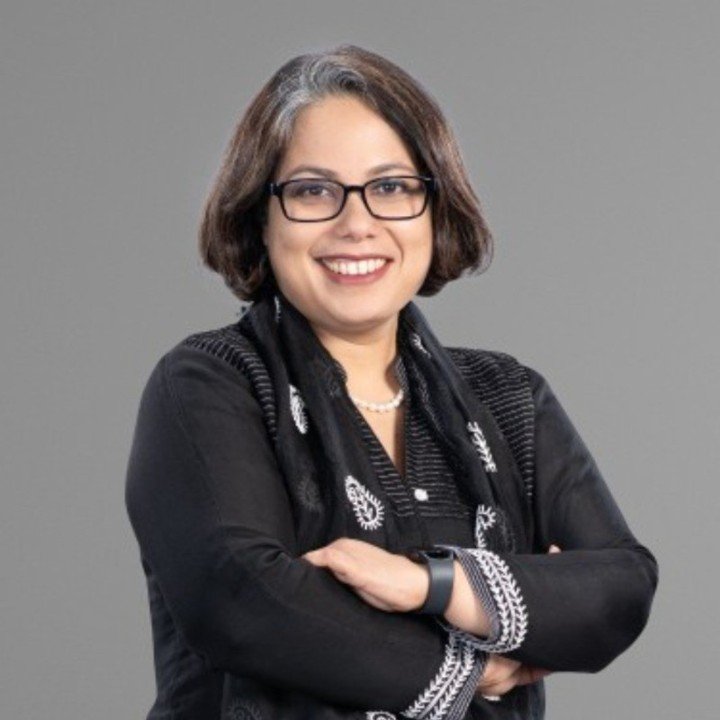
“The question is no longer whether diversity is good for business. The evidence has settled that. The question is whether your organisation has the courage to act on what the evidence says.”
Every year, as International Women's Day arrives, Bangladesh's corporate landscape fills with tributes. Photographs of women in leadership. Statements about inclusion. Campaign hashtags. And then, on March 9th, the conversation quietly retreats — until next year.
At Second Mountain Consulting, we believe this pattern is not just ineffective. It is actively harmful. It allows organisations to feel they have done something, while doing nothing that measurably changes outcomes for the people they claim to champion.
This article is an invitation to think differently — to move from performative diversity gestures toward evidence-based DE&I strategy. We will examine the business case, the Bangladesh context, the most common failure modes, and a practical framework for organisations ready to do the real work.
Part 1: The Business Case is Not a Debate
The McKinsey Diversity Wins research — now in its fourth iteration — consistently shows that companies in the top quartile for gender diversity on executive teams are 25% more likely to have above-average profitability than those in the bottom quartile. Companies in the top quartile for ethnic and cultural diversity outperform those in the bottom quartile by 36% in profitability.
This is not correlation-as-speculation. These are controlled analyses across hundreds of organisations in multiple geographies. The mechanism is well-understood: diverse teams generate a wider range of perspectives, challenge assumptions more effectively, and are less vulnerable to groupthink — the cognitive trap responsible for some of the most catastrophic corporate failures in modern history.
For HR professionals in Bangladesh, the local evidence is equally compelling. Organisations in our garment sector that have invested in women's advancement into supervisory and mid-management roles report measurably higher productivity per line, lower defect rates, and reduced absenteeism. These are not soft outcomes. These are line items that appear on the P&L.
“In Bangladesh, 4.5 million women hold up our largest export industry. The question is not whether women can lead. It is whether we will design organisations that let them.”
Part 2: The Bangladesh Context — Distinctive Challenges
Any honest DE&I conversation in Bangladesh must acknowledge the structural realities that shape it. We are not operating in the same context as a European or North American organisation. Understanding our specific landscape is not an excuse for slower progress — it is a prerequisite for designing interventions that will actually work.
The Representation Paradox
Bangladesh presents a striking paradox. At the macro level, we have had female heads of government for over three decades. Our RMG workforce is predominantly female. The microfinance revolution — which transformed rural poverty — was built on the agency of women.
And yet, in corporate Bangladesh, women hold an estimated 5–12% of C-suite and board positions (depending on sector and source).
The paradox tells us something important: representation at the base and representation at the top are not automatically connected. There is a structural break somewhere in the middle — and that is precisely where DE&I strategy must intervene.
The Double Burden
In Bangladesh's social context, many professional women carry what researchers call the ‘double burden’ — full professional responsibilities alongside primary caregiving responsibilities at home. This is not a personal failing. It is a structural reality that organisations, if they choose to, can partially address through policy: flexible working arrangements, robust maternity and paternity policies, and a workplace culture that does not penalise career breaks.
The organisations we observe retaining their female talent most effectively have one thing in common: they have stopped treating flexibility as a special favour granted to women, and started treating it as an organisational design principle that benefits everyone.
The Intersectionality Gap
DE&I in Bangladesh must also grapple with intersectionality — the compounding effect of multiple marginalised identities. A woman from a lower socioeconomic background faces different barriers than a woman from an urban, educated family. A woman with a disability faces additional layers of exclusion. Effective DE&I strategy cannot treat ‘women’ as a monolithic category. It must ask: which women? And what specific barriers apply to them?
Part 3: Why DE&I Strategies Fail — The Five Most Common Mistakes
Mistake 1: The Awareness Trap
Many organisations invest heavily in awareness training — one-day workshops, sensitivity sessions, unconscious bias modules — and then wonder why nothing changes. Awareness is necessary but never sufficient. Knowing that unconscious bias exists does not automatically change how decisions are made in promotion committees, performance reviews, or hiring panels. Awareness must be coupled with structural change to processes.
Mistake 2: Treating Diversity as a Hiring Problem
Diversity is not a hiring problem. It is a retention, development, and promotion problem. Organisations that focus exclusively on bringing diverse talent in while doing nothing to change the culture, the career pathways, or the decision-making processes simply accelerate turnover among the very people they are trying to retain. You cannot hire your way to inclusion.
Mistake 3: No Metrics, No Accountability
What does not get measured does not get managed. If your DE&I strategy does not include specific, time-bound, measurable targets — and if those targets are not tied to performance accountability for leaders — it is not a strategy. It is a wish list. The organisations making genuine progress on DE&I treat diversity metrics with the same rigour they apply to financial metrics.
Mistake 4: Confusing Activity with Impact
Launching a women's network, hosting a panel discussion, or publishing a DE&I statement are activities. They are not, in themselves, outcomes. Outcomes are: the percentage of women in senior leadership roles increased by X%. The gender pay gap narrowed by Y%. The promotion rate for women reached parity with the promotion rate for men at the same performance level. DE&I leaders must be held accountable for outcomes, not activities.
Mistake 5: Senior Leadership Disengagement
DE&I cannot be delegated entirely to HR. When the CEO and the leadership team are not visibly, consistently, and personally committed to the agenda — not just in speeches but in decisions — the rest of the organisation reads the signal accurately. In our experience, the single strongest predictor of DE&I progress in Bangladesh organisations is whether the top leadership team genuinely believes it matters for business performance. When they do, things move. When they do not, no amount of HR initiative compensates.
Part 4: A Framework for DE&I That Delivers Results
At Second Mountain Consulting, we use a four-stage framework for building DE&I strategies that are evidence-based, contextually grounded, and measurably effective.
Stage 1: Diagnose with Precision
Before designing any intervention, organisations must understand their specific DE&I landscape. This means:
- Conducting a gender pay audit — not just average salaries by gender, but pay at the same level, with the same performance rating, in the same function
- Mapping the ‘leaky pipeline’ — where specifically do women exit the organisation, or plateau, relative to men?
- Running structured focus groups and exit interview analysis to understand lived experience
- Benchmarking representation data against sector peers and setting realistic targets
The diagnosis must be honest enough to be uncomfortable. If your data shows that women are promoted at half the rate of men at the same performance level, that is not a pipeline problem. That is a structural bias problem in your promotion process.
Stage 2: Intervene in the Systems, Not the Symptoms
Effective DE&I interventions target the systems and processes where bias operates, not the people who experience it. This means:
- Structured, criteria-based interviewing and promotion processes that reduce the scope for subjective judgement
- Diverse panels for hiring and promotion decisions
- Blind CV screening at the early application stage where feasible
- Explicit sponsorship programmes — not mentoring, which is about advice, but sponsorship, which is about advocacy and opportunity
- Flexible working as a default, not an exception
Stage 3: Build Leaders as Accountability Owners
DE&I metrics must be embedded in leadership performance frameworks. This is not controversial — it is how organisations drive any strategic priority. If a business leader's performance review includes revenue targets, customer satisfaction targets, and quality targets, it should also include people diversity targets.
The conversation with leaders is not ‘you must hire X% women.’ The conversation is: ‘You are accountable for building a team that draws on the full available talent pool, and we are going to measure and reward that.’
Stage 4: Measure, Communicate, and Iterate
DE&I progress must be tracked with the same rigour as any other business KPI. Organisations should establish a DE&I dashboard that includes:
- Representation by gender (and other dimensions) at each level of the organisation
- Promotion rates by gender at each level
- Pay equity ratios at each level and function
- Retention rates by gender
- Employee Net Promoter Score (eNPS) disaggregated by gender
Results should be communicated transparently — including where progress is falling short. Organisations that are honest about their gaps earn more credibility, and ultimately achieve better results, than those that only communicate successes.
Part 5: A Note on Our Own Commitment
Second Mountain Consulting is an entirely women-led firm. This is not a coincidence and it is not marketing. It reflects a deliberate conviction that the Bangladesh HR consulting space needs more senior women with hard-won line experience — not just in advisory roles, but at the ownership level.
We have all navigated the dynamics this article describes — from the inside. That experience shapes everything we build for clients. We do not design DE&I programmes from theory. We design them from evidence, and from the lived reality of what it takes to advance in corporate Bangladesh.
“We did not build Second Mountain to be an all-women firm as a statement. We built it because we believed the work would be better. So far, we have been right.”
Part 6: Where to Start — A Practical First Step
If your organisation is ready to move beyond the IWD photograph and into genuine DE&I work, here is the most valuable first step we recommend:
Run a promotion equity audit. Pull the data on every promotion decision in your organisation over the last two years. Calculate the promotion rate for women versus men at each seniority level, controlling for performance rating. If you find a gap, you have found your starting point. If you find parity, you have evidence to build on.
This single exercise — done rigorously and honestly — will tell you more about the DE&I reality in your organisation than any awareness workshop. And it will give you the specific, evidence-based mandate to begin changing the systems that produce the gap.
DE&I work is not easy. It is not comfortable. It requires leaders to confront data that challenges comfortable narratives. But it is among the highest-ROI investments an organisation can make in Bangladesh today — in terms of talent retention, organisational performance, and long-term competitiveness.
The organisations that get this right will have a structural talent advantage over those that do not. That advantage compounds over time. The best time to start was five years ago. The second-best time is now.
Ready to move from DE&I intention to DE&I impact? Second Mountain Consulting can help you diagnose your current state, design evidence-based interventions, and build accountability systems that deliver measurable results. Let's start the conversation.